
The Educator’s Blueprint: Crafting the Ultimate EMS Teaching Resource Guide

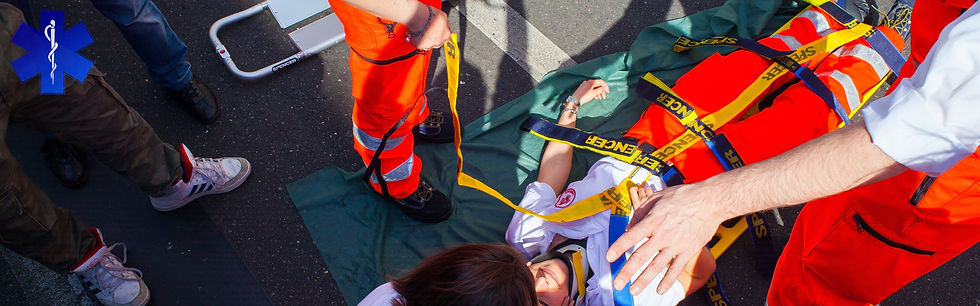
The Educator’s Blueprint: Crafting the Ultimate EMS Teaching Resource Guide
A practical guide for EMS Program Directors, Deans, and Educators in initial and continuing education
JOHN SPENCER, MBA, MSL, NRP, NCEE
Chief Operations Officer (COO)
Platinum Educational Group
Let’s be honest: most of us did not get into EMS education because we loved writing lesson plans. We got into it because we care deeply about preparing the next generation of providers to perform under pressure, think critically, and, most importantly, to be competent and compassionate clinicians. But here’s the thing: how we teach matters just as much as what we teach. And without a solid, thoughtfully built resource guide, even the most passionate instructor is improvising when they could be excelling.
Whether you are directing an initial EMT or Paramedic program, facilitating continuing education for seasoned providers, or overseeing a multi-level EMS curriculum, a comprehensive teaching resource guide is not a luxury; it is a foundational professional tool. This article walks through the essential components of building one that works: for you, your instructors, and, most critically, your students.
Why a Resource Guide? The Case for Structure in EMS Education
EMS education is uniquely demanding. Instructors are expected to deliver content that is clinically accurate, cognitively appropriate, and aligned with national standards, all while keeping adult learners engaged and preparing them for high-stakes assessments. Without a centralized, well-organized resource guide, instructors often default to inconsistent approaches, outdated materials, or content that inadvertently misaligns with current evidence-based practices.
Research in health professions education consistently demonstrates that structured curricula and standardized instructional resources improve both learner performance and program outcomes (Thomas et al., 2022). For EMS specifically, where the gap between what a student knows and what they can do in the field has real consequences, structured guidance is not just best practice; it is an ethical obligation.
A well-designed educator resource guide delivers four core benefits:
Consistency: Every student, regardless of which instructor teaches them, receives the same foundational knowledge and skill preparation.
Efficiency: Ready-made frameworks and materials allow educators to focus their energy on delivery and student engagement rather than reinventing the wheel.
Accuracy: Content aligned with current guidelines, practice analyses, and national education standards keeps instruction evidence-based.
Adaptability: A modular guide can be tailored for initial education students and continuing education providers without starting from scratch.
The Building Blocks: What Every Educator Resource Guide Needs
Think of your resource guide as the playbook for your program. A great playbook does not just list the plays; it explains the why behind each one, prepares players for unexpected situations, and gives coaches tools to evaluate performance. Here is what your EMS educator guide should include.

1. Curriculum Alignment and Learning Objectives
Every lesson, module, or CEU topic should be anchored to a recognized curricular standard. For initial education programs, this means alignment with the National EMS Education Standards (NHTSA, 2021) and the appropriate NREMT Practice Analysis for the target provider level. For continuing education, alignment with CAPCE standards and current clinical guidelines ensures that contact hours are both meaningful and defensible.
The National Association of EMS Educators addresses curriculum alignment directly in Foundations of Education: An EMS Approach, which provides EMS-specific frameworks for designing, delivering, and evaluating learning that is legally and ethically grounded (NAEMSE, 2020). It is a practical companion for any program director building or refreshing a resource guide.
Learning objectives should be written using Bloom’s Taxonomy as a framework (Bloom et al., 1956; Anderson & Krathwohl, 2001). Not every EMS objective lives at the knowledge or comprehension level; most patient care decisions require application, analysis, and evaluation. A well-constructed objective names the behavior, the condition, and the criterion. For example:
“Given a patient presenting with altered mental status, the EMT will correctly identify at least four differential diagnoses and select the appropriate intervention sequence with 100% accuracy.”
That is a teachable, testable, and clinically meaningful objective. Start there, and everything else in your guide follows.
2. Lesson Plans and Instructional Frameworks
Effective lesson plans in EMS education should follow a structured instructional design model. The ADDIE framework (Analysis, Design, Development, Implementation, Evaluation) is widely applied in healthcare education and provides a systematic approach to building instruction that addresses learner needs, context, and measurable outcomes (Stefaniak, 2021). Foundations of Education: An EMS Approach translates this model specifically into EMS lesson planning, including step-by-step guidance for writing objectives, structuring instructional sequences, and selecting appropriate teaching methods (NAEMSE, 2020).
At a minimum, each lesson plan should include:
Topic title and estimated instructional time
Curricular reference and Bloom’s level for each objective
Required materials, equipment, and pre-reading
Instructional sequence (opening, direct instruction, guided practice, independent practice, closure)
Formative assessment strategies (questions, case scenarios, quick checks)
Notes on differentiation for varying experience levels
For continuing education instructors, lesson plans should also include a brief rationale connecting the topic to current practice gaps, protocol updates, or quality improvement data. Adult learners, especially experienced providers, engage more deeply when they understand why the content is relevant right now (Knowles et al., 2025).
3. Scenario-Based Learning Materials
If there is one element of an EMS resource guide that earns its weight in gold, it is a well-designed scenario library. Simulation and scenario-based education are among the most evidence-supported strategies in EMS and healthcare training. A scoping review of simulation in paramedic education found that simulation is consistently effective at teaching clinical skills, building student competence, and providing learners with experiences that transfer directly to real patient care (Wheeler & Dippenaar, 2020).
Scenarios in your resource guide should be:
Clinically realistic and aligned with current protocols
Designed with clear learning objectives tied to specific provider levels
Written in a bias-neutral, gender-neutral format unless clinical context requires otherwise
Structured to escalate in complexity, simulating the dynamic nature of real calls
Accompanied by detailed facilitator debriefing guides
Scenarios should not be reserved only for the final practical. Weave them throughout your curriculum as formative learning tools. A well-run scenario mid-module often does more for retention and critical thinking than an hour of lecture.
4. Assessment and Evaluation Tools
Assessment is not just about grading; it is about feedback. Your guide should equip instructors with a range of assessment tools that serve both purposes. Written assessments should include items developed with attention to psychometric quality: appropriate reading level for the target provider, alignment to learning objectives, and clear, bias-free language (AERA, APA, & NCME, 2014).
For initial education programs, written assessments should mirror the format and cognitive demand of national certification exams. This means moving beyond simple recall items to include application, analysis, and evaluation level questions that require students to reason through clinical situations, not just recite protocols. Item stems should be written in the present tense, avoid absolute language like “always” or “never,” and present realistic, clinically grounded scenarios.
Skills evaluation checklists should include both critical fail criteria and competency benchmarks, allowing instructors to distinguish between a student who is unsafe and one who simply needs more practice. Feedback should be immediate, specific, and actionable.
5. Reference Materials and Resource Lists
Your guide should include a curated, current reference list that instructors can use with confidence. Acceptable sources for EMS educator materials include:
Initial education and advanced practice textbooks for the relevant provider level
American Heart Association Guidelines and Emergency Cardiovascular Care resources
Prehospital Trauma Life Support (PHTLS) and International Trauma Life Support (ITLS) manuals
NASEMSO National Model EMS Clinical Guidelines
NAEMSE’s Foundations of Education: An EMS Approach as an educator-specific pedagogical reference
Evidence-based and peer-reviewed research articles from recognized journals
Keeping reference materials current is not a one-time task. Build a review cycle into your program calendar, at a minimum annually, to audit your guide against updated guidelines and revised national standards.
Initial vs. Continuing Education: Tailoring the Guide for Your Audience
One of the most common mistakes in EMS educator resource development is treating initial education and continuing education as the same thing with different content. They are not. The pedagogy is fundamentally different.
Initial education students are novice learners building foundational schemas. They benefit from structured, sequential instruction, frequent low-stakes assessment, and clear progression maps. Your guide for initial education instructors should emphasize scaffolding, direct instruction strategies, and formative checkpoints. Foundations of Education: An EMS Approach devotes substantial attention to classroom management, the application of learning theory, and evaluation strategies directly applicable to initial education program design (NAEMSE, 2020).
Continuing education providers are experienced, adult learners. Andragogy, the theory and practice of adult education, tells us they are self-directed, experience-driven, and motivated by relevance (Knowles et al., 2025). CEU instructors need a guide that leans into problem-centered learning, leverages the expertise in the room, and connects content to real-world practice scenarios participants have actually lived. Less lecture, and more facilitated discussion, case-based learning, and deliberate practice.
A smart resource guide accounts for both audiences by either creating separate tracks or clearly flagging which strategies, assessments, and materials are appropriate for each context.
Practical Tips for Building and Maintaining Your Guide
Start with your outcomes. Work backward from what your students need to be able to do at the end of the course. Every lesson, scenario, and assessment should serve those outcomes.
Involve your instructors. The best guides are co-created. Your faculty have clinical experience and teaching insight that no single author can replicate. Build in a review and contribution process.
Schedule regular reviews. EMS protocols change. National standards evolve. NREMT practice analyses are updated regularly. Set a calendar reminder; your guide is a living document, not a one-time project.
Use student data. Track assessment performance, pass rates, and instructor feedback. This data tells you where your guide is working and where it needs refinement.
Prioritize accessibility. Ensure materials are readable for your target provider level (using Flesch-Kincaid or a comparable measure), free of cultural and linguistic bias, and formatted for use across different learning environments, including field-based and hybrid instruction.
The Bottom Line
Great EMS educators do not wing it, and they should not have to. A comprehensive, well-maintained educator resource guide is the infrastructure that allows excellent teaching to happen consistently, regardless of who is standing at the front of the room.
The investment you make in building this guide is an investment in your students, your program’s outcomes, and ultimately the patients who will one day depend on the providers you trained. That makes it worth doing right.
Start with the end in mind, involve your team, commit to the update cycle, and build the guide your educators and your students deserve.
References
American Educational Research Association, American Psychological Association, & National Council on Measurement in Education. (2014). Standards for educational and psychological testing. American Educational Research Association.
Anderson, L. W., & Krathwohl, D. R. (Eds.). (2001). A taxonomy for learning, teaching, and assessing: A revision of Bloom’s Taxonomy of educational objectives. Longman.
Bloom, B. S., Engelhart, M. D., Furst, E. J., Hill, W. H., & Krathwohl, D. R. (1956). Taxonomy of educational objectives: The classification of educational goals. Handbook I: Cognitive domain. David McKay.
Thomas, P. A., Kern, D. E., Hughes, M. T., Tackett, S. A., & Chen, B. Y. (Eds.). (2022). Curriculum development for medical education: A six-step approach (4th ed.). Johns Hopkins University Press.
Knowles, M. S., Robinson, P. A., & Caraccioli, C. (2025). The adult learner: The definitive classic in adult education and human resource development (10th ed.). Routledge.
National Association of EMS Educators (NAEMSE). (2020). Foundations of education: An EMS approach (3rd ed.). Jones & Bartlett Learning.
National Highway Traffic Safety Administration. (2021). National EMS education standards 2021. National Highway Traffic Safety Administration.
Stefaniak, J. E. (2021). Needs assessment for learning and performance: Theory, process, and practice. Routledge.
Wheeler, B., & Dippenaar, E. (2020). The use of simulation as a teaching modality for paramedic education: A scoping review. British Paramedic Journal, 5(3), 31–43. https://doi.org/10.29045/14784726.2020.12.5.3.31


